Ferrari Challenge Brings High-Performance Racing to Road America
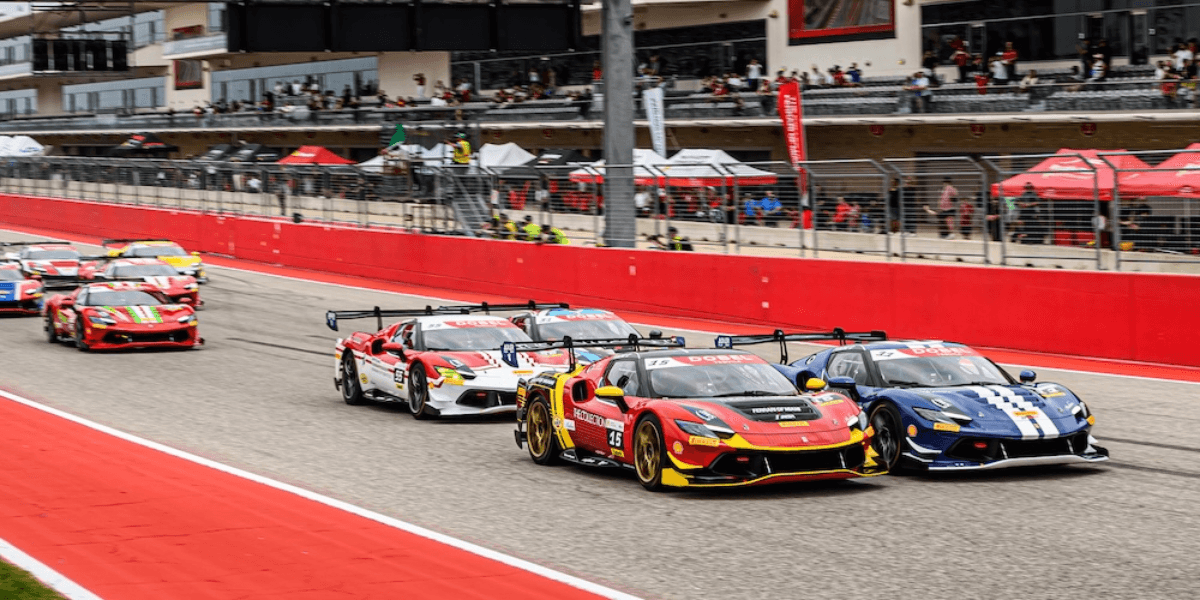
Ferrari’s 2026 North American racing series delivered speed, precision, and motorsport excitement during its penultimate weekend.
Ferrari Racing Returns to Road America
The Ferrari Challenge Trofeo Pirelli North America reached Road America in Wisconsin for a major race weekend concluding on September 13, 2026. The event brought Ferrari drivers, teams, and motorsport fans together for two days of competition on the historic four-mile circuit. The weekend formed the penultimate round of the 2026 season, increasing the importance of every qualifying session, overtaking attempt, and championship point.
The series is built around the Ferrari 296 Challenge, a purpose-built race car designed exclusively for circuit competition. Unlike road-going Ferrari models, the 296 Challenge is developed for track performance, with racing-focused aerodynamics, braking systems, suspension, and driver controls. Its presence at Road America offered spectators an opportunity to watch high-performance machinery compete in a professional racing environment while experiencing the atmosphere of a major motorsport gathering.
A Championship Weekend With High Stakes
The Road America event carried added significance because it was one of the final opportunities for drivers to improve their championship positions before the season-ending Finali Mondiali at Circuit de Barcelona-Catalunya in November. In a customer racing series, competitors often arrive with different levels of experience, but the championship structure creates a shared objective: extracting the strongest possible result from every session.
The penultimate round also placed greater pressure on teams to avoid mistakes. Mechanical issues, penalties, poor tire management, and contact can have an outsized effect late in a season. Drivers competing for titles must balance aggression with consistency, while those lower in the standings may need to take greater risks to close the gap. That tension is one of the defining features of professional circuit racing.
The Ferrari 296 Challenge Takes the Spotlight
The Ferrari 296 Challenge is the central attraction of the series. Powered by a 3.0-liter twin-turbocharged V6 engine producing approximately 700 horsepower, the car is engineered to deliver rapid acceleration, high cornering speeds, and strong braking performance. The model’s design is focused on racing rather than daily road use, making it particularly suited to the demands of a circuit such as Road America.
The car’s performance also places significant demands on its drivers. Managing a high-powered race car requires precise throttle control, late but controlled braking, accurate corner entry, and an ability to maintain concentration over multiple laps. Small differences in driving lines or tire condition can influence lap times, making the competition as much about discipline and technical execution as outright speed.
Road America Provides a Demanding Test
Road America is known for its long straights, fast corners, elevation changes, and limited margin for error. The circuit’s layout rewards cars and drivers capable of carrying speed while remaining stable through demanding turns. Its length also creates opportunities for drafting and overtaking, adding strategic complexity to the races.
The track’s character makes it a fitting venue for the Ferrari Challenge. Drivers must find a balance between straight-line speed and cornering performance, while teams must prepare cars for repeated high-speed braking and acceleration zones. Weather and track conditions can further affect tire performance and grip, forcing competitors to adjust their approach throughout the weekend.
Racing Offers More Than a Spectator Experience
Ferrari Challenge weekends are designed to provide an immersive motorsport experience rather than simply a series of races. Fans can watch practice, qualifying, and competition while observing the preparation and teamwork taking place in the paddock. The environment gives spectators a closer view of the technical and operational side of racing, including vehicle setup, pit-lane activity, and driver preparation.
For automotive enthusiasts, the event also represents an opportunity to see Ferrari performance technology used in a competitive setting. The 296 Challenge demonstrates how engineering decisions affect acceleration, braking, handling, and reliability. The experience connects the excitement of motorsport with the technical interests of fans who follow performance cars, racing equipment, and automotive design.
The Importance of Customer Racing
Ferrari Challenge is part of the broader customer racing tradition, in which drivers compete in professionally organized series using closely related vehicles and standardized technical rules. This structure allows private drivers and racing teams to participate in a controlled environment while receiving support from an established manufacturer and event organization.
Customer racing also creates a pathway for drivers to develop their skills. Participants learn how to manage race starts, traffic, tire wear, pit-lane procedures, and championship strategy. For experienced competitors, the series provides a platform to continue racing at a high level. For newer drivers, it offers exposure to the discipline and demands of organized motorsport.
Teams Manage Speed, Reliability, and Strategy
Although racing fans often focus on the driver, results depend on the combined work of engineers, mechanics, strategists, and support staff. Teams must prepare the cars, analyze data, monitor tire performance, and respond to changing conditions. A fast car is not enough if it cannot maintain reliability over the full race distance.
The Road America weekend placed particular importance on preparation because the season was approaching its conclusion. Teams needed to maximize performance while protecting championship positions. A consistent finish could be more valuable than an aggressive move that resulted in damage or a penalty. Those decisions demonstrate why professional racing requires both physical skill and strategic judgment.
The Road to Barcelona Continues
After the Road America round, attention turns toward the final stage of the 2026 Ferrari Challenge season and the Finali Mondiali in Barcelona. The global finale is expected to bring together Ferrari Challenge competitors from different regions, creating an international showcase for the series and its drivers.
The remaining schedule gives teams limited time to address weaknesses and build momentum. Drivers who performed strongly at Road America can carry confidence into the finale, while those who struggled will need to identify areas for improvement. Championship pressure is likely to increase as competitors approach the final opportunity to secure season honors.
A Strong Weekend for Motorsport Fans
The September 13 conclusion of the Ferrari Challenge weekend highlighted the continuing appeal of high-performance racing in the United States. Road America provided a demanding setting, while the Ferrari 296 Challenge delivered the speed and technical focus expected from a manufacturer-backed racing series.
The event also demonstrated why motorsport remains relevant to audiences interested in cars, engineering, competition, and adventure. The combination of powerful machinery, demanding circuits, and championship pressure creates an experience that extends beyond entertainment. As the 2026 season moves toward its international finale, the Road America round stands as an important chapter in the year’s racing calendar.

Men's Newspaper Contributor
This article features partner, contributor, or branded content from a third party. Members of the Men's Newspaper editorial staff were not involved in the creation of this content. All views and opinions are those of the contributor alone.