USATF Outdoor Championships Put America’s Fastest Athletes on Center Stage in New York
The 2026 Toyota USATF Outdoor and Para National Championships entered a pivotal weekend on Saturday, July 25, at Icahn Stadium in New York City. The four-day competition brought together Olympic champions, emerging prospects and leading para athletes for one of the most important events on the American track-and-field calendar.
Held from July 23 through July 26 on Randall’s Island, the championships feature many of the country’s best competitors across sprinting, middle-distance running, jumping and throwing events. National titles, personal records and future opportunities are at stake, making the competition meaningful even in a season without an Olympic Games or outdoor world championships.
Friday night’s 100-meter finals produced the first major headlines of the weekend.
Noah Lyles won the men’s title in a world-leading 9.79 seconds, matching his personal best and finishing ahead of Ronnie Baker. Kenny Bednarek placed third. Lyles, an Olympic champion and one of the most recognizable athletes in American track and field, is also competing in the 200 meters.
Sha’Carri Richardson controlled the women’s 100-meter final, winning in 10.77 seconds. Kayla White finished second in 10.90, while Tamari Davis took third in 11.00. Richardson had already demonstrated her speed during the semifinal round, where she recorded a wind-aided 10.78.
The performances by Lyles and Richardson highlighted the United States’ continued strength in short-distance events. The country has long produced elite sprinters, but national championships remain highly competitive because established stars must face younger athletes and experienced challengers seeking breakthrough performances.
Saturday’s schedule continued the focus on speed, endurance and versatility. Lyles was expected to begin his 200-meter campaign, while the men’s and women’s 400-meter finals were among the day’s featured events.
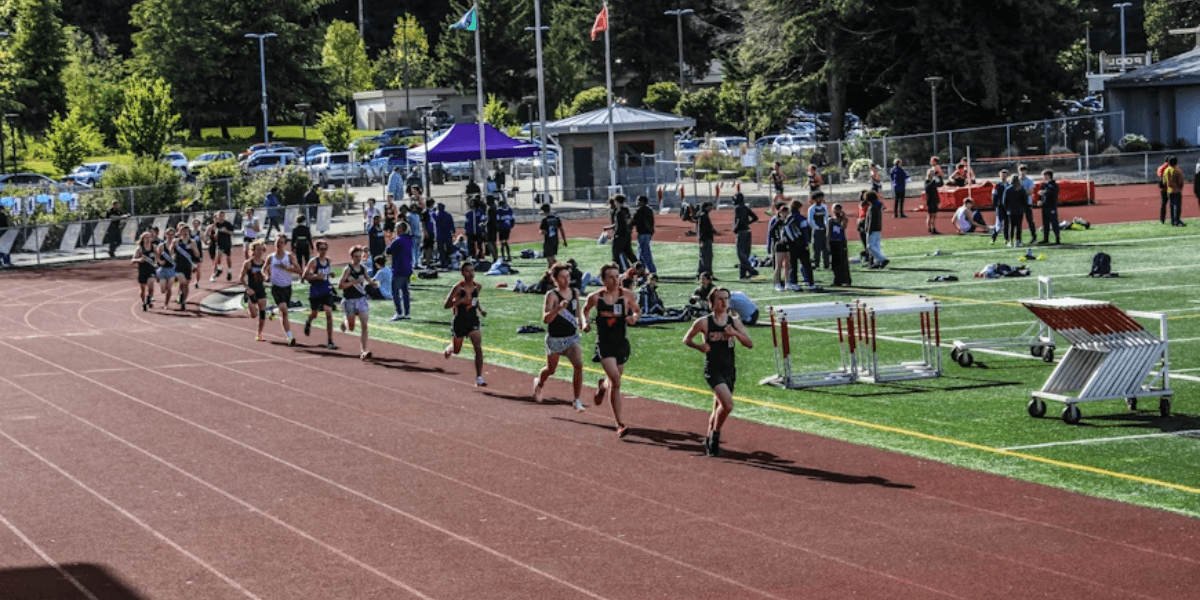
The 1,500-meter finals offered a different kind of challenge. Unlike the explosive 100 meters, longer races reward patience, positioning, pacing and the ability to accelerate after several demanding laps. These events often become tactical contests in which athletes must decide whether to lead early, stay behind the front runners or wait for a final-lap sprint.
The championships are also introducing viewers to promising younger competitors.
Seventeen-year-old Cooper Lutkenhaus advanced through the men’s 800-meter heats with a time of 1:45.83. Wes Ferguson recorded the fastest overall qualifying performance at 1:45.17. In the women’s 800 meters, Roisin Willis led the opening round with a 1:59.83 performance.
Those results set up important finals and gave emerging athletes an opportunity to gain experience against some of the country’s strongest runners. Competing successfully at a national championship can help young athletes build confidence and prepare for future international events.
The inclusion of the USATF Para National Championships is another important part of the event. Olympic and Paralympic athletes are competing during the same four-day program, giving spectators a broader view of elite American track and field.
The combined format places different running, jumping and throwing disciplines within one national showcase. It also gives audiences an opportunity to appreciate the preparation, technique and athletic ability required across multiple classifications and events.
This year’s championships also carry historical significance. The competition marks the 150th anniversary of the first U.S. Outdoor Championships, which were staged by the New York Athletic Club in the Bronx in 1876.
Returning the national meet to New York connects the modern professional era with the early development of organized track and field in the United States. Icahn Stadium’s relatively compact layout also allows spectators to closely observe race tactics, technical execution and athlete preparation.
For fitness-minded readers, the championships provide several practical lessons.
Elite sprinting requires much more than natural speed. Starts, posture, coordination, relaxation and efficient mechanics can determine the difference between winning and finishing outside the medals. Middle-distance racing adds pacing and strategic decision-making, while field events depend heavily on repeatable technique.
Recreational athletes should not attempt to copy the training workloads of professionals. However, they can apply broader principles demonstrated by elite competitors, including consistent practice, gradual progression, proper recovery and attention to movement quality.
The meet also shows that performance is built over time. Athletes may compete for only a few seconds or minutes, but their results reflect months or years of structured training, strength work, mobility sessions, recovery and careful preparation.
The biggest takeaway from New York is that national championships remain meaningful outside an Olympic year. Athletes compete for recognition, personal bests and momentum toward future seasons, including the long road to the 2028 Los Angeles Olympics.
With established stars producing fast times and younger competitors gaining valuable experience, the 2026 championships are showcasing both the present and future of American track and field.

Men's Newspaper Contributor
This article features partner, contributor, or branded content from a third party. Members of the Men's Newspaper editorial staff were not involved in the creation of this content. All views and opinions are those of the contributor alone.