
Massachusetts Fishermen Land 1,260-Pound Blue Marlin Off Cape Cod
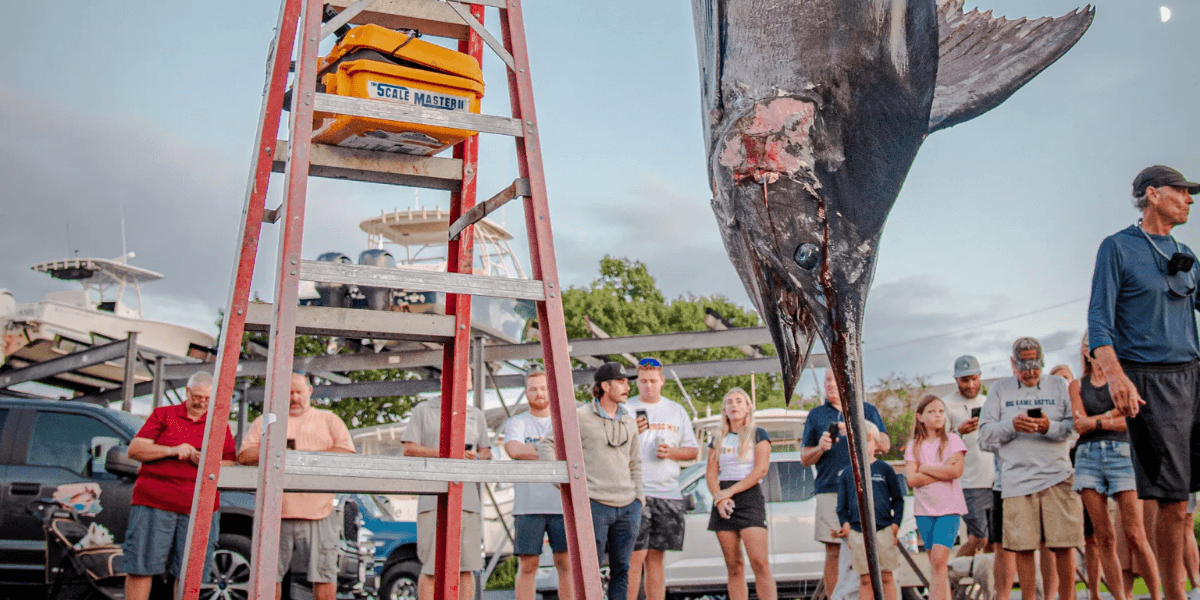
Two Massachusetts fishermen made an extraordinary catch off the coast of Cape Cod after landing a blue marlin weighing approximately 1,260 pounds, a fish believed to rank among the largest of its kind ever caught along the U.S. East Coast.
The enormous marlin was caught roughly 100 miles off Cape Cod after fishermen initially believed they had encountered a shark.
The fish measured more than 11 feet long and required an extended fight before it could be brought alongside the boat.
Captain Damon Sacco and angler Walter Chapman were aboard the charter vessel when the encounter occurred. Sacco had been fishing in the area when he noticed a large fin moving through the water.
The size of the animal initially made identification difficult. After getting a closer look, the fishermen realized they were dealing with a blue marlin.
The ensuing battle lasted approximately three hours.
Landing a fish of that size requires considerable physical effort as well as careful handling of fishing equipment. Large marlin are powerful predators capable of making long runs after being hooked, putting substantial pressure on fishing lines, rods and reels.
The catch was eventually brought aboard, where its size could be documented.
At approximately 1,260 pounds, the marlin was just short of the overall world record for a blue marlin. However, its size was extraordinary for the U.S. East Coast and generated significant attention among recreational fishermen and marine observers.
The catch was also notable because blue marlin are more commonly associated with warmer ocean environments. The waters off New England are substantially cooler than the tropical and subtropical regions where the species is most commonly encountered.
Ocean temperatures can vary considerably depending on currents and seasonal conditions. Large pelagic fish sometimes travel long distances in search of favorable feeding conditions.
Scientists were interested in examining the fish after the catch, including its head, to gather information that could help estimate its age.
Researchers suggested that the fish could have been several decades old, although an exact age requires scientific examination.
Determining the age of large marine animals can provide information about growth rates, population structure and the conditions fish experience throughout their lives.
The catch also drew attention to the broader question of how ocean conditions may affect the distribution of large fish species.
Warming waters and changing marine conditions can influence where species are found at different times of the year. However, a single catch cannot establish a long-term population or climate trend.
For recreational fishermen, the event was primarily remarkable because of the size of the animal.
Blue marlin are among the largest predatory fish in the world's oceans, and encountering one of this size is considered an exceptional fishing experience.
The fight also demonstrated the importance of specialized equipment and experienced crews when targeting large pelagic species.
The fishermen initially mistaking the marlin for a shark illustrates how difficult it can be to identify large marine animals from a boat. A fin moving across the surface can provide only limited information before the animal approaches the vessel.
Once the fishermen recognized the species, the significance of the encounter became clear.
The size of the marlin also meant that documenting the fish was important. Measurements and photographs provide evidence that can be reviewed by fisheries officials and researchers.
The catch did not break the global blue marlin record, but its size placed it among the most remarkable catches reported from the East Coast.
For Massachusetts, the event provided an unusual reminder that waters off New England can support encounters with large pelagic species normally associated with warmer regions.
For the fishing community, it became an example of why offshore trips can produce unexpected experiences even for experienced captains.
The event also highlights the difference between recreational fishing and commercial fishing. Recreational anglers often pursue large fish as a sporting challenge, while scientific interest can emerge when an unusually large specimen is encountered.
The decision to study the marlin's remains could provide additional information about its age and biological history.
The catch therefore has significance beyond its size. It offers researchers an opportunity to examine an unusually large marine animal while giving fishermen a rare story from waters off the Massachusetts coast.
The 1,260-pound blue marlin became one of the most remarkable fishing catches reported from the region, combining sport, marine science and the unpredictability of offshore fishing.
For the fishermen who fought the fish for hours, however, the significance was immediate: an ordinary offshore trip had turned into an encounter with one of the largest blue marlin ever reported from the U.S. East Coast.

Men's Newspaper Contributor
This article features partner, contributor, or branded content from a third party. Members of the Men's Newspaper editorial staff were not involved in the creation of this content. All views and opinions are those of the contributor alone.
You May Also Like